A major milestone for Carpathia
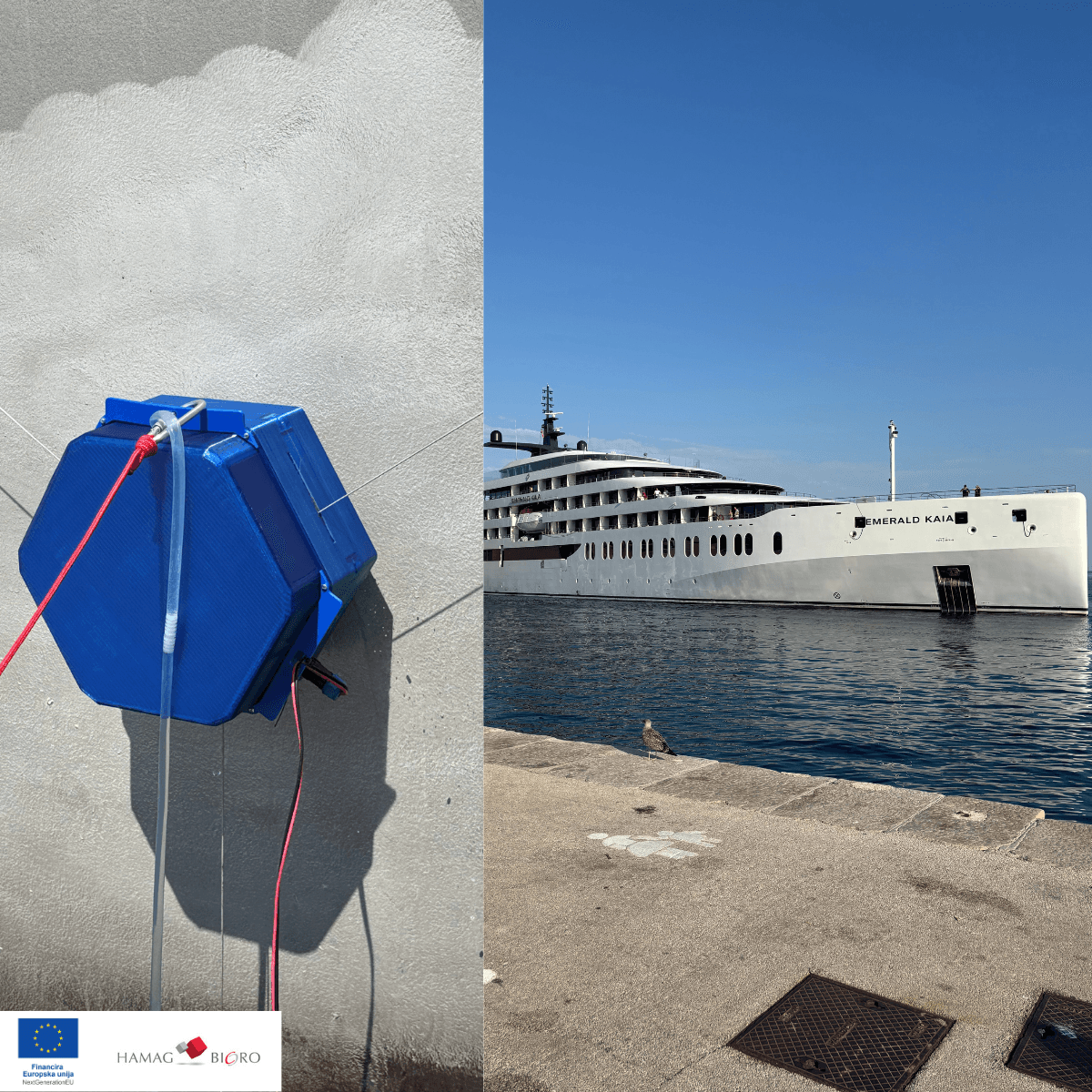
On 2 August 2026, Hartera Robotics reached an important development milestone with Carpathia — our robotic platform for vessel hull maintenance — during a real-world operation aboard the luxury yacht cruiser Emerald Kaia in Rovinj, Croatia.
The operation moved Carpathia beyond workshop development and controlled testing environments, placing the system directly onto an operational vessel and exposing it to the conditions, surfaces and practical constraints encountered in professional marine maintenance.
For the Hartera Robotics team, this represented an important step in validating not only the robot itself, but also the broader concept behind Carpathia: bringing robotics and automation into repetitive and demanding exterior vessel maintenance operations.
Working directly on an operational vessel
During the operation, Carpathia was positioned directly on the vessel’s exterior surface and used to work on heavily contaminated areas around the aft section of Emerald Kaia.
The process included the use of water followed by a biodegradable cleaning solution, allowing the team to evaluate the robot’s behaviour and cleaning process on real surface contamination.
Unlike controlled workshop tests, a real vessel introduces a combination of factors that are difficult to reproduce artificially: hull geometry, surface condition, environmental exposure, contamination levels, accessibility and the practical requirements of working around an operational marine environment.
This made the Emerald Kaia deployment particularly valuable for the continued development of Carpathia.
From engineering prototype to real-world application
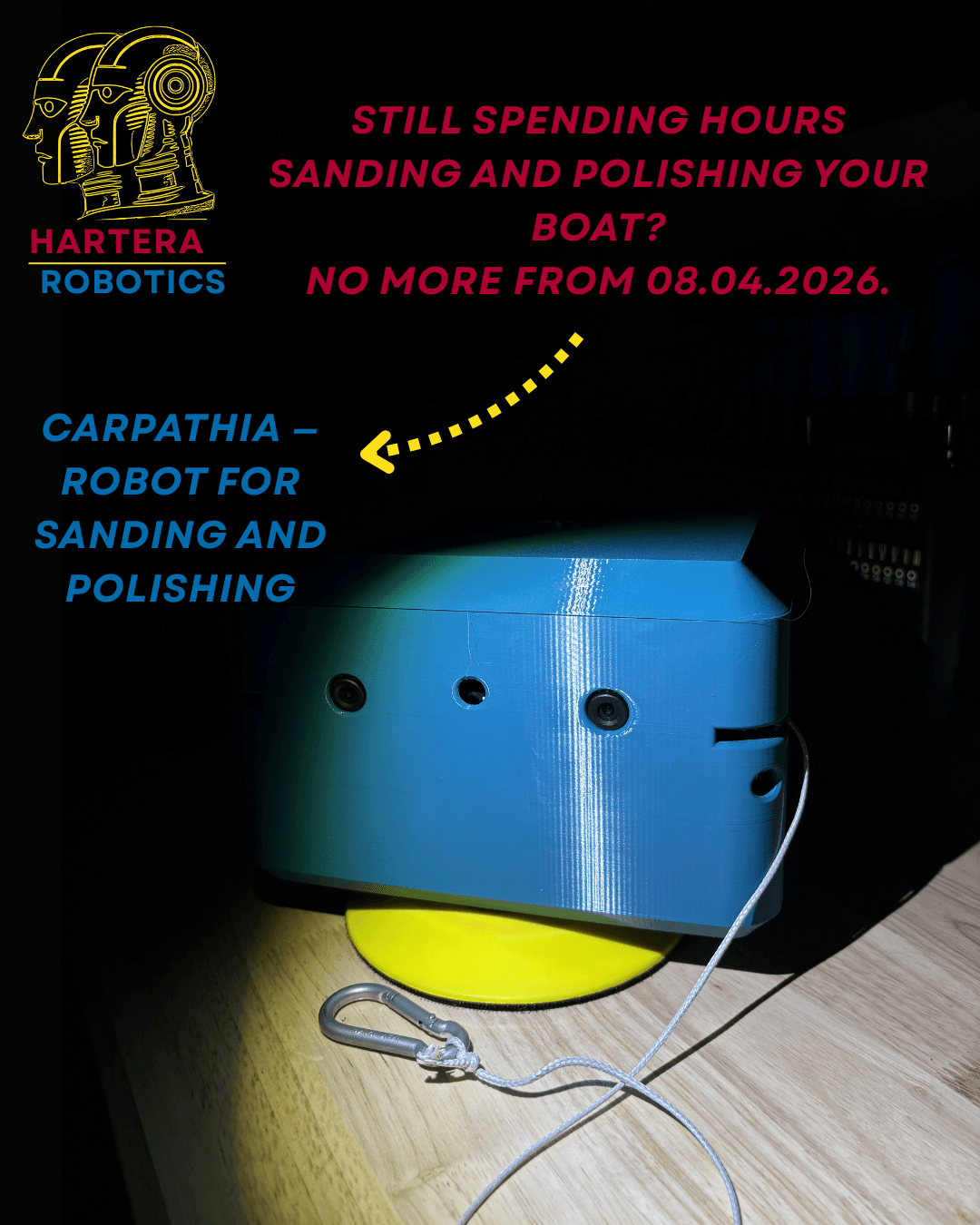
Carpathia has been developed as a robotic solution intended to support cleaning, polishing and maintenance operations on vessel hulls.
The project combines mechanical engineering, electronics, sensing, control software and robotic movement into a single platform designed specifically around the requirements of marine surfaces.
The Emerald Kaia operation allowed these different subsystems to be evaluated together outside the development environment.
Instead of validating individual components separately, the team was able to observe how the complete robotic system behaved during an actual hull-maintenance task.
That distinction is important for the project.
It represents the transition from asking:
“Can the system work?”
to:
“How should the system be improved to perform reliably and efficiently in real marine operations?”
Valuable operational feedback
The deployment provided the development team with practical information that cannot be obtained solely through simulation or laboratory testing.
Among the areas evaluated during the operation were:
- robot positioning and stability on the vessel surface,
- interaction between the working mechanism and the hull,
- behaviour on real marine surface contamination,
- accessibility of different working areas,
- cleaning process and fluid application,
- operator workflow,
- preparation and deployment requirements,
- practical constraints associated with professional vessel maintenance.
The operation also provided direct feedback that will be incorporated into the next development stage of Carpathia.
Building the next generation of Carpathia
The goal of the project has never been simply to create a robotic prototype.
Carpathia is being developed toward a practical robotic platform capable of supporting repeatable marine maintenance tasks while reducing the amount of repetitive manual work required from operators.
Experience gathered aboard Emerald Kaia is therefore being used as direct engineering input for the next generation of the system.
Development will continue to focus on improving the robot’s mechanical architecture, mobility, surface interaction, control, reliability and overall operational workflow.
The objective is to move progressively from a functional robotic platform toward a robust and commercially applicable system designed for real vessel maintenance environments.
A step closer to commercial deployment
The Emerald Kaia operation represents an important milestone in the development journey of Carpathia.
What began as an engineering concept has progressed through mechanical development, electronics integration, software development and controlled testing into operation on a real vessel.
For Hartera Robotics, every deployment like this provides something more valuable than a laboratory result: real operational knowledge.
That knowledge will guide the next development phase as we continue working toward a new generation of Carpathia and its future commercial application within the marine industry.